Montana’s “Black Gold”: The Story of the Radersburg Marble Quarry
✴︎
When people think of Radersburg, Montana, they usually think of the 1860s gold rush or its reputation as a quiet, historic town nestled in Broadwater County. But tucked away in the foothills of the Big Belt Mountains lies a different kind of treasure: Montana Black and Gold marble.
In the early 20th century, this remote corner of the Treasure State caught the eye of the Vermont Marble Company (VMC)—at the time, the largest marble manufacturer in the world. This is the story of how Montana stone made its way from a rugged canyon to the halls of power in Washington, D.C.
Why Vermont Came to Montana
By the 1920s, the Vermont Marble Company was a global powerhouse. While they had plenty of white marble in New England, architects of the Art Deco era were hungry for dramatic, high-contrast colors.
They were looking for an American alternative to the expensive “Portoro” marble imported from Italy. They found exactly what they needed near Radersburg: a deep, midnight-black limestone (technically a “recrystallized limestone” or marble) shot through with striking veins of gold, amber, and orange.
The Operation: Carving the Mountain
Operating a quarry in rural Montana in the 1920s and 30s was no small feat of engineering.
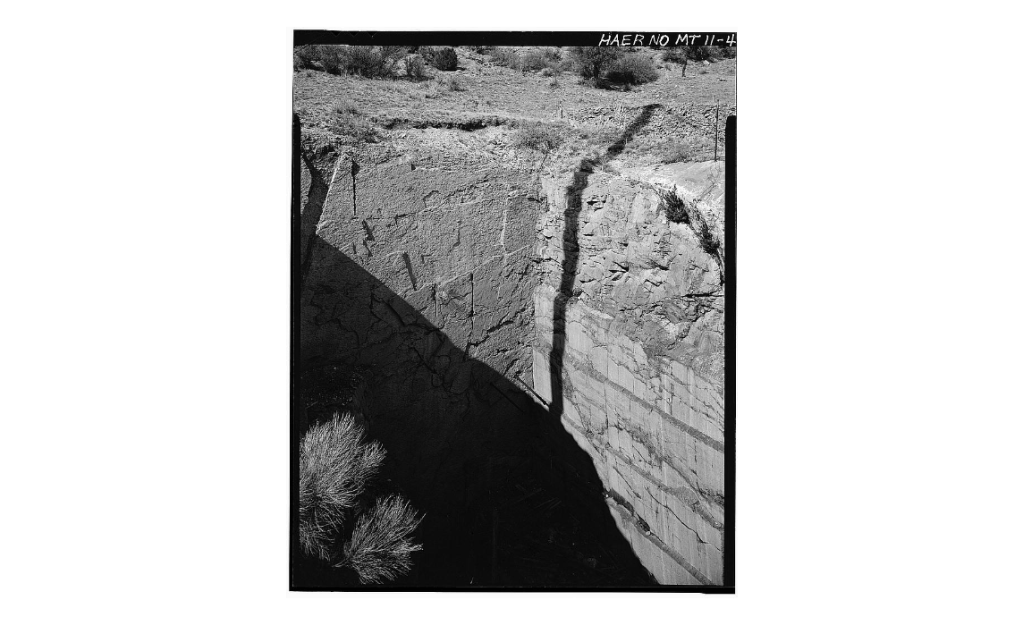
- Extraction: Workers used channeling machines and wire saws to cut massive blocks of stone directly from the earth.
- The “Montana Black and Gold”: The stone was prized for its “Egyptian” look—a dark, regal aesthetic that perfectly suited the opulence of the roaring twenties.
- Logistics: Once the blocks were quarried, they had to be hauled over rough terrain to the nearest railhead. From there, they traveled thousands of miles to Vermont to be polished and finished before being shipped to their final destinations.
From Radersburg to the World
If you’ve ever walked through a grand government building or a historic skyscraper, you may have stood inches away from Radersburg history. Because of the Vermont Marble Company’s reach, this Montana stone was used in some of the most prestigious projects in the United States, including:
- The U.S. Supreme Court Building: Montana Black and Gold was used for decorative interior elements.
- The National Archives: Adding to the solemnity of the nation’s most important documents.
- The Idaho State Capitol: Specifically used in the beautiful wainscoting and trim.
- Luxury Hotels and Banks: Used in lobbies across the country to signal wealth and permanence.
The End of an Era
The Radersburg quarry didn’t last forever. Several factors led to its eventual closure:
- The Great Depression: Demand for luxury building materials plummeted in the 1930s.
- Transportation Costs: Shipping heavy stone from a remote Montana canyon to the East Coast became increasingly difficult to justify.
- The Rise of Synthetics: As architectural styles shifted toward Modernism, the demand for heavy, ornate marble gave way to concrete, glass, and steel.
The Quarry Today
Today, the quarry site is a quiet reminder of Montana’s industrial diversity. While the massive machinery is gone, the “scars” in the earth remain, showing where the great black blocks were once lifted. It stands as a testament to a time when Montana wasn’t just mining for ore, but for the very fabric of American architecture.
 theslab.blog